Category: Blog Post

  • Building a Strong B2B Brand with AI Marketing

    Building a Strong B2B Brand with AI Marketing

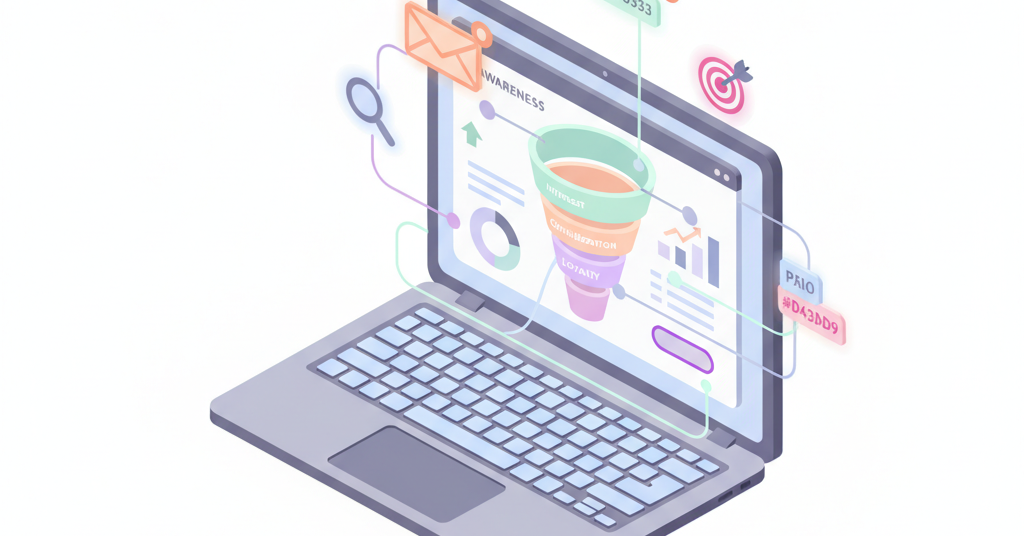
    AI marketing for B2B branding - Featured image for Discovr

    Building a Strong B2B Brand with AI Marketing

    B2B Marketing… sometimes called the wild-wild-west of marketing, is one of the most complex forms of marketing from an ROI perspective. As a B2B founder or marketer, you’re building trust and manoeuvring your way through noise and evolving customer expectations. When done right, it provides a significant boost in establishing a strong brand presence, trust signals, and long-term conversions even in a crowded marketplace.  But it requires consistency and patience, qualities many professionals and businesses lack. So, problems usually surface when it’s time to get your hands dirty daily, creating content and building a trustworthy brand.

    The question is: how can you use artificial intelligence to carve out a unique identity for your brand? This article will walk you through creative strategies and practical tips to elevate your B2B brand using AI-driven marketing.

    Table of Contents

    1. Understanding AI Marketing and Its Importance
    2. Key Benefits of AI Marketing for B2B Branding
    3. How to Implement AI Marketing in Your B2B Branding Strategy
    4. Overcoming Common Challenges in AI Marketing for B2B Brands
    5. Successful AI Marketing Cases in B2B Branding
    6. Conclusion: Embrace AI for B2B Branding Success

    Understanding AI Marketing and Its Importance

    What is AI Marketing?

    AI marketing involves using artificial intelligence technologies in various marketing campaigns and processes. This approach includes content creation, data analysis, customer segmentation, personalisation, and automation. When B2B businesses use AI, they can sift through large datasets, spot trends, and make informed decisions that strengthen their brand and enhance customer engagement.

    The Impact of AI on B2B Branding

    AI’s impact on B2B branding is pretty noteworthy:

    • Efficiency: By automating repetitive tasks, marketers can devote more time to strategy and creativity.
    • Personalization: Advanced data analytics allow brands to create tailored experiences that truly resonate with customers.
    • Predictive Insights: AI can anticipate market trends, helping businesses adapt swiftly.

    A report by McKinsey found that 61% of marketers believe using AI tools can significantly boost their profitability.

    Key Benefits of AI Marketing for B2B Branding

    1. Enhanced Customer Insights

    AI marketing tools enable comprehensive assessments of customer behaviors, preferences, and challenges. With this information at hand, B2B marketers can:

    • Segment Their Audience More Effectively: Customize marketing campaigns that address the specific needs of different segments.
    • Identify Trends: Understanding customer behavior allows brands to innovate and align their offerings with market demands faster.

    2. Optimized Content Strategies

    Content is vital for B2B branding, and AI can enhance your content marketing efforts:

    • Content Generation: AI tools can help create high-quality, relevant content tailored to target audiences.
    • SEO Optimization: AI-driven platforms assist in identifying keywords and refining content strategies, keeping your brand front and center.

    For instance, AI-powered platforms like echoMarketer  have helped businesses show remarkable improvements in content reach and engagement from search engines like Google and LLMs like Perplexity, ChatGPT, and Gemini. It did this by optimising the business’s website and consistently creating super-optimised content for SEO/GEO/AIO

    3. Improved Customer Engagement

    Customer engagement is essential for building strong B2B relationships. Here’s how AI can make a difference:

    • Chatbots: These AI solutions offer 24/7 customer support, ensuring that inquiries are addressed promptly.
    • Predictive Lead Scoring: AI can analyze user behaviors and predict which leads are likely to convert, facilitating focused outreach.

    Studies reveal that businesses harnessing AI for customer engagement have experienced, on average, a 25% increase in overall sales (Source: Statista).

    How to Implement AI Marketing in Your B2B Branding Strategy

    1. Define Your Brand Objectives

    Before diving into AI marketing, it’s essential to set clear branding goals. Reflect on:

    • Market Positioning: Where do you want your brand to be relative to competitors?
    • Customer Identification: Clearly outline your target audience.

    2. Choose the Right AI Tools

    The market offers a range of AI marketing solutions. Consider these key tools:

    • Outbound Marketing: This requires reaching out to potential customers via email, calls, etc. Certain outbound marketing tool such as Apollo.io, Clay, and others can help here.
    • Organic marketing: Unlike outbound marketing, which requires manual outreach, inbound marketing builds trust and draws the target audience to you when they search for the problem your business solves. Tools like Discovr help here…Discovr AI banner B2B organic Marketing
    • CRM Systems with AI Capabilities: Platforms like Salesforce and Zoho provide data-driven insights and automation features.
    • Analytics Platforms: Google Analytics with AI functionalities can deliver actionable insights from customer data.

    3. Create Personalized Content

    Utilize AI to map your customer’s journey and tailor your content accordingly. Implementing strategies such as account-based marketing (ABM) can further personalize your approach, ensuring your messages connect with specific buyer personas.

    4. Monitor and Adapt

    AI continually evolves and learns. After rolling out your AI marketing strategies, regularly monitor key performance metrics, refine strategies based on insights, and optimize campaigns to maintain effectiveness.

    Overcoming Common Challenges in AI Marketing for B2B Brands

    1. Data Privacy Concerns

    As data privacy issues rise (e.g., GDPR), handling customer data ethically becomes paramount. Be transparent about how you use this data in your marketing strategy.

    2. Integration with Existing Systems

    AI tools need to integrate smoothly with your current marketing framework. Make sure to evaluate your existing software before implementing new solutions to avoid disruptions.

    3. Skills Gap

    As AI technology advances, some marketing teams may face a skills gap. Investing in training programs will empower your team with essential digital skills and AI knowledge.

    Successful AI Marketing Cases in B2B Branding

    Case Study: HubSpot

    HubSpot has effectively embraced AI to personalize content recommendations and automate marketing workflows, leading to impressive improvements in lead generation and customer satisfaction.

    Case Study: Salesforce

    By using AI, Salesforce revamped its CRM, integrating intelligent lead scoring and predictive analytics, significantly enhancing service and increasing client retention rates.

    These case studies showcase the tangible benefits of incorporating AI into branding strategies as B2B brands adjust to the evolving marketing environment.

    Frequently Asked Questions

    Q1: What are the primary benefits of AI marketing for B2B branding?
    A1: The main benefits include enhanced customer insights, optimized content strategies, and improved customer engagement through automation and predictive analytics.

    Q2: How can AI tools improve content marketing for B2B brands?
    A2: AI tools assist in generating high-quality, relevant content, optimizing SEO keywords, and adjusting strategies to increase reach and engagement effectively.

    Q3: What challenges should businesses be aware of when implementing AI marketing?
    A3: Common challenges include addressing data privacy concerns (like GDPR compliance), integrating new AI tools with existing systems, and overcoming skills gaps in marketing teams.

    Q4: Can you give examples of companies successfully using AI in their B2B branding?
    A4: HubSpot and Salesforce are notable examples; HubSpot uses AI to personalize content and automate workflows, while Salesforce employs AI for lead scoring and predictive analytics, improving customer retention.

    Conclusion: Embrace AI for B2B Branding Success

    As the digital marketplace becomes more complex, integrating AI marketing for B2B branding is not just a trend; it has become a necessity. By utilizing AI effectively, your brand can gain invaluable insights, enhance customer experiences, and drive growth. Stay ahead of the competition by strategically implementing AI tools that will elevate your B2B branding efforts.

    Ready to transform your branding strategy? Discover how Discovr can tailor AI marketing to meet your unique B2B needs. Visit us at www.echoMarketer.tech to learn more about achieving a powerful B2B brand presence.

  • B2B Marketing AI Automation: Achieving Efficiency and Scale Without the Big Budget

    B2B Marketing AI Automation: Achieving Efficiency and Scale Without the Big Budget

    B2B marketing AI automation - Featured image for Discovr

    Why B2B Marketing AI Automation Matters Now

    According to Social Media Examiner (source), 60% of marketers now use AI tools daily, a significant jump from 37% in 2024. This isn’t merely a trend; it’s a strategic shift towards greater efficiency, enhanced personalization, and demonstrable revenue impact, especially as budgets tighten. If you’ve been tasked with achieving more with less, B2B marketing AI automation is your solution for delivering results without breaking the bank.

    This guide will lead you through what to automate, which budget-friendly tools to consider, how to organize your data and workflows, and how to measure ROI in a way that resonates with sales leadership.

    Table of Contents

    1. What is B2B Marketing AI Automation?
    2. Core Use Cases That Deliver Quick Wins
    3. How to Build a B2B Marketing AI Automation Stack on a Lean Budget
    4. B2B Marketing AI Automation for ABM Without the Big Budget
    5. A 30-60-90 Day Roadmap to Operationalize B2B Marketing AI Automation
    6. Measuring B2B Marketing AI Automation ROI
    7. Governance, Data Privacy, and Risk Controls
    8. Common Pitfalls and How to Avoid Them
    9. Practical Templates to Copy
    10. FAQs About B2B Marketing AI Automation
    11. Your Next Step

    What is B2B Marketing AI Automation?

    B2B marketing AI automation utilizes machine learning and generative AI to streamline repetitive, rules-based, and data-intensive tasks across your marketing funnel. It connects your CRM, marketing automation platform (MAP), and sales engagement tools, allowing your team to focus on strategic and creative initiatives.

    Key capabilities include:

    • Predictive scoring and routing: Speed up the handoff of qualified leads.
    • Intent signal detection: Identify priority accounts and trigger timely outreach.
    • Content generation and optimization: Create effective emails, landing pages, and ads.
    • Personalization at scale: Improve account-based marketing (ABM), website calls to action (CTAs), and outreach sequences.
    • Performance modeling and budget optimization: Increase your ROI effectively.

    The result? Faster pipeline progression, improved conversion rates from Marketing Qualified Leads (MQLs) to Sales Qualified Leads (SQLs), and reduced costs per opportunity.

    Core Use Cases That Deliver Quick Wins

    Start with automation where you can see measurable revenue impact in a matter of weeks.

    • Automated Content Generation: Create and publish content like blog posts, email nurture newsletters, social posts, etc, consistently and autonomously. For social, you can then create human videos on a weekly basis to back up the autonomous content.
    • SEO & AI Search Optimisation: Publish content that has been pre-optimised by AI for both SEO & I search ranking. Also, leverage autonomous website optimisation AI tools like Discovr AI, if you’re not an SEO expert.
    • Lead and Account Scoring: Quickly score and route leads using first-party behaviors—like site visits and form submissions—combined with firmographic data and intent signals.
    • Email and Nurture Optimization: Leverage AI to draft subject lines and determine optimal sending times; workflows can adapt dynamically based on engagement and buying stage.
    • SDR Enablement: Automated research briefs and summaries of calls and emails reduce administrative tasks, allowing for better follow-ups.
    • Ad Audience Building: Identify lookalikes based on high-value accounts, minimize ad waste by excluding negative audiences, and reallocate budgets based on predicted performance.
    • Content Repurposing: Transform a webinar into a blog, social media posts, and email campaigns; break down thought leadership into digestible, channel-ready pieces.

    How to Build a B2B Marketing AI Automation Stack on a Lean Budget

    You don’t need an elaborate tech stack to achieve real results. Instead, focus on a lightweight, adaptable set of tools to demonstrate value swiftly.

    Data Foundation First

    • Establish your CRM as the system of record, ensuring field cleanliness and clear lifecycle stages.
    • Implement tracking that captures UTM parameters and essential on-site events.
    • Standardize account hierarchies and rules for de-duplication.

    Low-Cost, High-Impact Components

    • A generative AI writer/editor will help craft email, ad, and nurture copy.
    • Implement predictive lead scoring or rules-based scoring supplemented by AI insights.
    • Identify intent signals—like site search and recurring page visits—and use them as triggers.
    • An automation builder should allow for branching paths and reliable CRM updates.

    Orchestration Principles

    • One Source of Truth: Ensure all updates begin in one system and synchronize outward.
    • Clear Ownership: Marketing operations manage workflows, while sales operations validate routing.
    • Version Control: Keep a log of changes to scoring, triggers, and service-level agreements (SLAs).

    Try Discovr AI today for Organic B2B Marketing Automation and insights, on a lean budget and without the marketing team bloat.

    Discovr AI banner B2B organic Marketing

    B2B Marketing AI Automation for ABM Without the Big Budget

    Account-based marketing can be time-consuming when done manually. With AI, you can efficiently manage ABM efforts even with a small team.

    • Tiering: Automatically classify ideal customer profiles (ICPs) using firmographics and technographics; flag high-potential accounts based on their recent activity.
    • Signals: Use straightforward intent signals—such as repeat visits and resource downloads—to prompt outreach, gift campaigns, or executive emails.
    • Personalization: Tailor dynamic hero text and case studies by industry, and refine CTAs according to account segments; AI can assist with crafting copy.
    • Sales Alignment: Send automated alerts to the responsible sales representative, complete with a one-paragraph brief, suggested outreach sequences, and relevant assets.

    This approach leads to more meetings from your existing media spend and clearer attribution across the buying committee.

    A 30-60-90 Day Roadmap to Operationalize B2B Marketing AI Automation

    A phased approach will help you build credibility quickly.

    • Days 1–30: Audit and Quick Wins
      • Clean up CRM fields, lifecycle stages, and routing rules.
      • Implement baseline lead scoring and an intent-triggered nurturing campaign.
      • Launch AI-assisted email subject lines and test ad copy.
    • Days 31–60: Scale and Connect
      • Add account scoring and research briefs for your SDRs.
      • Introduce dynamic website elements focusing on your top industries.
      • Begin distributing a weekly report on pipeline impact (opportunities influenced, velocity).
    • Days 61–90: Optimize and Prove ROI
      • Automate budget redistribution based on predicted costs.
      • Incorporate predictive indicators into routing (for instance, combine site engagement with firmographic data).
      • Develop a leadership dashboard linking campaigns to revenue and changes in win rates.

    Measuring B2B Marketing AI Automation ROI

    It’s crucial to focus on the metrics that matter to boards and Chief Revenue Officers (CROs). Vanity metrics simply won’t do.

    • Pipeline and Revenue Metrics
      • Track opportunities created and influenced.
      • Analyze trends in average deal size and win rates.
    • Velocity and Efficiency
      • Measure speed-to-lead and speed-to-first-touch metrics.
      • Look at MQL-to-SQL conversion rates and how quickly leads progress through stages.
    • Cost and Productivity
      • Determine costs per opportunity and meeting.
      • Assess content throughput and the time taken from brief to shipment.

    Ensure each AI workflow connects to a key performance indicator (KPI). For example: predictive scoring correlates with MQL-to-SQL conversion; AI email testing relates to response rates; and automating SDR briefs ties directly to saved time and booked meetings.

    Governance, Data Privacy, and Risk Controls

    B2B marketing AI automation has to be safe, accurate, and in compliance with regulations.

    • Data Minimization: Share only necessary fields with AI systems; redact personally identifiable information (PII) when possible.
    • Human Oversight: Require approvals for new messaging, high-risk segments, or compliance-sensitive industries.
    • Brand and Tone Controls: Utilize templates and guidelines to keep messaging consistent across channels.
    • Audit Trail: Document prompts, outputs, and any changes to scoring and routing rules.
    • Security Reviews: Conduct vendor assessments and update data processing agreements (DPAs) before deploying new tools.

    Common Pitfalls and How to Avoid Them

    • Over-Automation: If every interaction is automated, the quality of engagement will suffer. Keep human involvement in crucial moments.
    • Poor Quality Data: Ensure field hygiene and deduplication are established before layering on AI.
    • Tool Sprawl: Opt for fewer tools that work well together and standardize your processes.
    • Undefined Success Criteria: Set specific targets (e.g., +20% MQL-to-SQL) before launching initiatives.
    • Ignoring Sales Feedback: Regular sync-ups ensure that scoring and triggers align with real-world results.

    Practical Templates to Copy

    Implement these straightforward rules to deliver value quickly, often in days rather than months.

    • Lead Routing Rule:
      • IF score exceeds threshold AND ICP tier A THEN assign to AE, initiate a three-step sequence, and add to the “Demo” nurture.
    • Intent-Triggered Outreach:
      • IF pricing page visited AND webinar attended THEN alert AE with a brief; enroll the contact in a case study email.
    • Lifecycle Update:
      • IF contact replies OR schedules a meeting THEN automatically advance to SQL and timestamp the stage change.
    • Ad Budget Shift:
      • IF CPO in campaign exceeds target for seven consecutive days THEN decrease spend by 25% and reallocate to the best-performing audience.

    Frequently Asked Questions

    What are the key capabilities of B2B marketing AI automation?
    Key capabilities include predictive scoring and routing, intent signal detection, content generation and optimization, personalization at scale, and performance modeling with budget optimization.

    Which use cases provide quick wins with AI automation?
    Lead and account scoring, email and nurture optimization, SDR enablement, ad audience building, and content repurposing are effective quick-win use cases.

    How can a lean budget support building an AI automation stack?
    Focus on a clean CRM foundation, use low-cost AI tools like generative AI writers, predictive scoring, intent triggers, and ensure orchestration principles like one source of truth and clear ownership.

    How do you measure ROI for B2B marketing AI automation?
    Measure pipeline and revenue impact, velocity and efficiency metrics, and cost/productivity indicators—all connected to specific AI workflow KPIs.

    Is it possible to do ABM with AI automation on a small budget?
    Yes. AI can automate tiering, detect signals, personalize messaging, and assist sales alignment to scale ABM efforts without large teams or budgets.

    Your Next Step

    B2B marketing AI automation is no longer a far-off dream; it’s a practical approach. Start with one workflow that connects directly to revenue, assemble a lean tech stack, and show your results. If you’re looking for a customized plan suited to your specific funnel—or if you want to see how a small team can expand ABM and pipeline using AI—reach out to Discovr.

  • How Discovr Frees Professional Marketers from Burnout

    How Discovr Frees Professional Marketers from Burnout

    marketing burnout - Featured image for Discovr

    The statistic every marketing leader needs to see about marketing burnout

    Seventy percent! That’s how many professionals in media, marketing, and creative fields reported experiencing burnout in the past year. According to Mi3’s coverage of the 2024 Mentally Healthy Survey, the extent of the marketing burnout crisis is clear. If you lead a team, manage growth targets, or keep the content engine humming, you’ve probably sensed a drag on focus, creativity, and performance.

    Table of Contents

    1. The hidden costs of marketing burnout
    2. What causes marketing burnout today?
    3. How Discovr tackles marketing burnout at the source
    4. People also ask: Key questions about marketing burnout
    5. A 30-60-90 day plan to combat marketing burnout with Discovr
    6. Marketing burnout warning signs to watch for
    7. Why Discovr’s approach works
    8. Frequently Asked Questions

    The hidden costs of marketing burnout

    Marketing burnout isn’t just a personal struggle; it poses operational and financial risks that accumulate over time.

    • Missed revenue and pipeline: Slower campaign cycles, postponed launches, and fewer experiments all reduce top-of-funnel momentum.
    • Rising customer acquisition costs (CAC) and wasted funds: Exhausted teams overspend on “safe” channels, fail to optimize effectively, and overlook early signals in the data.
    • Quality decline: Creative fatigue leads to generic content, an inconsistent brand voice, and the need for more revisions.
    • Talent turnover: Recruiting and onboarding new team members drains both budget and valuable institutional knowledge.
    • Decision delays: Constantly putting out fires hampers strategic planning, measurement practices, and essential investments in SEO and content.

    When marketing burnout takes hold, teams often shift their focus from outcomes to mere activity. Busywork increases, and operational obstacles multiply. Though the costs may not be apparent in a single budget line, they manifest throughout the organization.

    What causes marketing burnout today?

    Several overlapping factors contribute to burnout. Understanding them can help you devise better solutions.

    • Channel overload: The rise of new platforms and formats means more deliverables without a corresponding increase in headcount.
    • Performance pressure: Demanding objectives and quarterly targets narrow focus, prioritizing short-term wins over long-term strategy.
    • Fragmented tools: Jumping between project management tools, documents, analytics, and advertising platforms hinders deep work.
    • Manual reporting: Collating KPIs, validating attributions, and updating stakeholders takes away critical hours from high-skilled tasks.
    • Reactive work: Last-minute requests, ad hoc campaigns, and urgent approvals disrupt planned workflows.
    • Vague processes: Unclear briefs, undefined service-level agreements (SLAs), and ambiguous ownership lead to more rework and frustration.

    If you’ve ever wondered, “What causes marketing burnout?” you’ll find it’s seldom down to a single factor. Instead, it’s a combination of workload, frequent context switching, and unclear operating models.

    How Discovr tackles marketing burnout at the source

    Burnout is a symptom of operational drag, and the quickest relief often comes from eliminating the friction encountered in everyday work. Discovr AI focuses on five key areas so teams can regain their time and energy.

    Automate repetitive tasks that fuel marketing burnout

    Empower your team by freeing them from tasks that hinder fast results.

    • Intake and triage: Streamline requests with Ekko, the lead agent, to help with prioritisation and task due date logic.
    • Brief creation: Transform objectives and audience insights into structured briefs and to-do lists.
    • Contextualisation: Streamline context per brand so every idea, creative, copy, design, and strategy stays on brand, thereby solving the context switching problem.
    • Pre-optimised content: Get written and design content pre-optimised for SEO, GEO, LLMO, and AI  Search.
    • Approval & Execution: Simplify content execution with an AI calendar and contextualised execution on multiple content platforms like WordPress. All that is required is human direction, review, and approval.

    Automation won’t replace creativity, strategy, or storytelling; instead, it eliminates the repetitive steps that drain your team’s energy and contribute to burnout.

    Reduce context switching with one workspace to run campaigns

    Fragmented tools can slow down productivity. A centralized workspace keeps the workflow smooth.

    • Unified calendar and roadmap: Ensure launches, narratives, and dependencies are aligned across growth, content, product, and sales.
    • Asset library with version control: Say goodbye to scavenger hunts for outdated materials.
    • Campaign templates: Replicate successful strategies (like webinars, product launches, and seasonal promotions) with built-in tasks, owners, and SLAs.
    • AI assistant for retrieval: Use natural language questions to easily access briefs, insights, and best practices in seconds.

    When all elements of the work coexist in one space, collaboration thrives and marketing burnout fades.

    Capacity planning that prevents overload before it starts

    Most teams overcommit because their capacity is unclear. Make it transparent.

    • Workload heatmaps: Visualize team and individual utilization week by week.
    • WIP limits: Establish reasonable work-in-progress caps for producers and reviewers.
    • SLA policies: Clearly define review timelines and escalation paths to avoid delays.
    • Scenario planning: Analyze trade-offs across channels and programs before promising delivery dates.

    Preventing marketing burnout is simpler than reversing it. Right-sized plans not only protect outcomes but also boost morale.

    Quality and governance without bottlenecks

    Ensure brand integrity and compliance while maintaining high velocity.

    • Guardrails, not gatekeepers: Incorporate brand voice, legal terms, and accessibility checks directly into workflows.
    • Review matrices: Route approvals based on content type, budget, or risk level.
    • Experiment templates: Standardize A/B tests with clear hypotheses, power calculations, and metrics for success.
    • Post-mortems that learn: Translate successes and failures into reusable playbooks for your team.

    Governance should clarify processes, not add to meeting fatigue. This approach allows you to deliver faster without chaos.

    Insights that cut through noise and pressure

    When your dashboards are clear and trustworthy, teams can make informed decisions with less anxiety.

    • Unified attribution: Aggregate channel, CRM, and product analytics into an easily digestible KPI view.
    • KPI alerts: Highlight leading indicators (like cost per lead, click-through rates, conversion rates, and pipeline velocity) when they shift significantly.
    • Experiment library: Document successful tactics by stage, persona, and channel for future reference.
    • Executive-ready views: Provide on-demand snapshots that summarize key insights for leadership in just one slide.

    Clarity reduces stress, and stress is a significant contributor to marketing burnout.

    People also ask: Key questions about marketing burnout

    Here are straightforward answers to some of the most common questions leaders often ask.

    Is automation a genuine solution for marketing burnout or just a quick fix?

    Automation is a valuable tool, but it’s not a magic solution. It helps eliminate repetitive tasks that sap focus, but it should be paired with capacity planning, clear prioritization, and realistic objectives. Together, these elements can reduce overload, allow for strategic thinking, and help prevent a recurrence of burnout.

    How quickly can teams experience relief from marketing burnout?

    Many teams feel a lift in just 2–4 weeks once busywork and reporting processes are automated. Deeper benefits typically emerge within 1–2 quarters as standardized briefs, templates, and work-in-progress limits stabilize workflows and decrease rework. The ongoing prevention of burnout relies on maintaining these operational practices.

    What should leaders measure to prevent marketing burnout in the long term?

    Keep an eye on both outcomes and early operational signals:

    • Throughput vs. work-in-progress
    • Cycle time by content type
    • Percentage of rework
    • SLA compliance in reviews
    • Capacity utilization
    • Employee feedback scores on workload, clarity, and focus time

    These metrics help make workloads transparent and keep burnout at bay.

    A 30-60-90 day plan to combat marketing burnout with Discovr

    You don’t need a massive overhaul to achieve results. Use this guide to regain control while meeting your targets.

    Days 1–30: Quick wins that reduce noise

    • Audit all recurring tasks and reports; automate the top five time sinks.
    • Centralize the campaign calendar and establish a single intake path.
    • Develop standard briefs for core assets (like landing pages, emails, ads, and blog posts).
    • Set initial work-in-progress limits for creators and reviewers.
    • Publish weekly KPI snapshots for leadership to minimize ad hoc requests.

    Impact: Expect fewer interruptions, clearer priorities, and measurable time reclaimed—early relief for marketing burnout.

    Days 31–60: Standardize how work flows

    • Transform your top three campaign types into reusable templates with defined tasks, owners, and SLAs.
    • Implement capacity dashboards and workload heatmaps for better planning.
    • Integrate brand guardrails and legal checks into your review process.
    • Build an experiment library with hypotheses and anticipated business impacts.
    • Educate stakeholders on intake and approval norms to curb “side-door” work.

    Impact: Less rework, expedited cycles, and smoother collaboration. As predictability rises, so does your team’s morale.

    Days 61–90: Scale insights and continuous improvement

    • Roll out unified attribution for critical customer journeys.
    • Introduce KPI alerts for when thresholds are breached to encourage proactive optimization.
    • Conduct monthly retrospectives to review data-driven wins, losses, and lessons learned to codify best practices.
    • Model scenarios for the next quarter against available capacity to set realistic objectives.
    • Celebrate the time you’ve regained and reinvest it into strategy, creativity, and experimentation.

    Impact: A virtuous cycle emerges where performance and well-being support one another rather than compete.

    Marketing burnout warning signs to watch for

    Recognizing early warning signs can help you intervene before productivity and morale take a dive.

    • Increasing cycle times with the same headcount
    • More off-hours work to “catch up”
    • Frequent scope changes and missed handoffs between teams
    • Approval queues that linger for days
    • An influx of “urgent” requests and a decrease in planned initiatives
    • Creative output shifting towards safe and generic content

    If three or more of these are true for your team, it’s time to address the operating model and workload to stave off marketing burnout.

    Why Discovr’s approach works

    The key takeaway here is simple: creative excellence requires operational excellence. You can’t expect high-impact strategy and compelling storytelling when mismatched calendars, tools, and approvals create constant obstacles. With automation handling repetitive tasks, reduced context switching, and a clearer view of capacity, Discovr enables teams to produce impactful work with less stress. The payoff? Fewer late nights, improved KPIs, and a sustainable escape from marketing burnout.

    Your team deserves an efficient way of working that enhances focus and impact instead of draining it. Discover how Discovr can help you work smarter, reclaim invaluable time, and leave marketing burnout behind.

    Research from HubSpot emphasizes the importance of effective marketing management in reducing burnout and boosting organizational success.

    Frequently Asked Questions

    Q1: What are the main causes of marketing burnout?

    A1: Marketing burnout is caused by factors such as channel overload, performance pressure, fragmented tools, manual reporting, reactive work, and vague processes that lead to workload imbalances and frustration.

    Q2: How does automation help reduce marketing burnout?

    A2: Automation eliminates repetitive low-value tasks like intake triage, brief creation, variant generation, smart tagging, and manual reporting, freeing up creative and strategic capacity.

    Q3: What signs indicate a team may be experiencing marketing burnout?

    A3: Signs include increasing cycle times, more off-hours work, frequent scope changes, long approval queues, urgent requests overtaking planned initiatives, and declining creative quality.

    Q4: How can capacity planning prevent marketing burnout?

    A4: By making workload transparent through heatmaps, setting work-in-progress limits, defining SLA policies, and conducting scenario planning, teams avoid overcommitment and maintain balanced workloads.

    Q5: What metrics should leaders track to monitor and prevent marketing burnout?

    A5: Leaders should track throughput vs. work-in-progress, cycle times, rework percentages, SLA compliance, capacity utilization, and employee feedback on workload and clarity.

  • How Marketing Agencies Use Discovr to Conquer Context Switching

    How Marketing Agencies Use Discovr to Conquer Context Switching

    Marketing Agencies Conquer Context Switching - Featured image for Discovr

    Context Switching: The Thief of Productivity

    Context switching is the sneaky thief of productivity. Every ping, tab, and handoff pulls your team’s focus in different directions—and that can quickly drain your margins. A recent study from Promethean Research (source) revealed that agencies expanding their services grew 9.7% in 2024, while those who stayed the same saw just a 1.1% increase. The bottom line? Keeping operations focused drives growth. In this guide, we’ll show you how marketing agencies can tackle context switching with practical strategies, metrics, and a streamlined operating system that minimizes friction.

    Table of Contents

    1. Why context switching hampers agency performance
    2. How marketing agencies overcome context switching with Discovr
    3. Marketing agencies take a metrics-first approach to conquer context switching
    4. Service-line playbooks for marketing agencies
    5. Implementation guide: rolling out in 30 days
    6. People also ask: Common questions about how marketing agencies manage context switching
    7. The payoff: from calm execution to growth

    Why context switching hampers agency performance

    Think of context switching as the weight that slows down everything an agency tries to achieve. It’s those constant toggles between Slack, email, project management tools, ad platforms, briefs, and clients that create mental clutter and cognitive overload.

    • Warning signs: endless meetings, delayed handoffs, scattered briefs, and redundant work across different platforms.
    • Costly consequences: rework, missed deadlines, extended project cycles, and reduced billable hours.
    • Human impact: distracted focus, increased stress, and a drop in creative quality.

    What does context switching mean in an agency setting?

    It refers to the shift from one mentally demanding task to another without adequate downtime. For account managers, this might look like jumping from a client issue to preparing a quarterly business review. Media buyers switch from strategizing bids to checking creative quality. Creative teams hop between revisions and brainstorming sessions. Each of these transitions adds more time before real value is delivered.

    The hidden math behind task switching

    • Every unexpected interruption—like direct messages or spontaneous requests—eats into your time and disrupts what could be “deep work.”
    • Having too many tools leads to micro-switching: you’ll find yourself flipping between tabs for analytics, project management, documents, assets, and chat.
    • Manual handoffs can cause delays; without a single source of truth, you end up chasing updates and statuses.

    When marketing agencies manage to tackle context switching effectively, they can reclaim focused time, speed up processes, and enhance productivity—all without burning out their teams.

    How marketing agencies overcome context switching with Discovr

    The most effective way for marketing agencies to manage context switching is by consolidating their tools into a single operations layer. With Discovr, agencies can centralize campaign operations within one workspace, allowing briefs, approvals, and updates to flow smoothly and keep teams in the zone.

    Discovr AI banner B2B organic Marketing

    A unified workspace triumphs over tool clutter

    • One reliable source for briefs, assets, tasks, and statuses—no more searching through multiple apps.
    • A standardized intake process that automatically directs requests to the appropriate team and individual.
    • Live status views for account teams and clients, slashing down on those annoying “just checking in” messages.

    AI-driven summaries and briefs minimize rework

    • Automated campaign briefs generated from discovery notes and previous successes.
    • Instant recaps of threads, tickets, and meetings, ensuring smooth handoffs.
    • Intelligent checklists that adjust based on the channel (like SEO, paid social, or content).

    Asynchronous client updates cut down on meetings

    • Scheduled, organized updates that summarize performance, decisions, and challenges.
    • Clearly defined next steps with assigned owners and due dates—no more calendar overload.
    • Client dashboards that answer the question, “What changed?” without needing a call.

    SOPs and templates take the guesswork out

    • Pre-approved workflows for creative reviews, tracking links, QA processes, and launch steps.
    • Reusable playbooks for various service lines (like SEO, paid search, social media, and email).
    • Guidelines that ensure quality remains high as workloads increase.

    Agencies that embrace these strategies see fewer interruptions, smoother handoffs, and more reliable project delivery.

    Marketing agencies take a metrics-first approach to conquer context switching

    You can’t improve what you don’t measure. A straightforward way for marketing agencies to address context switching is by quantifying its impact and monitoring operational improvements.

    Key performance indicators (KPIs) to focus on

    • Billable utilization: the percentage of hours spent on client-related work.
    • Cycle time: the duration from request to deliverable across different services.
    • SLA attainment: the percentage of tasks delivered on or before their deadlines.
    • Context switches per day: tracking interruptions, tool toggles, and task changes per role.
    • Rework rate: the number of tasks that require one or more revisions.
    • Meeting load: hours spent in meetings each week, per role.

    Quick methods to quantify context switches

    • Analyze your tech stack: monitor app and tab switches for two weeks with desktop analytics.
    • Categorize interruptions: differentiate between urgent and avoidable messages; log these for each individual.
    • Time block for deep work: allocate 2–3 focused periods daily and track how much you protect these times.
    • Measure handoff delays: note the time between “Ready for review” and “Reviewed.”

    When marketing agencies keep track of these KPIs weekly, the resulting gains become clear and defensible during quarterly business reviews.

    Service-line playbooks for marketing agencies

    Operational focus varies by function. Implementing these targeted strategies can help reduce cognitive load while maintaining speed.

    Account management

    • Streamline intake: use a structured form to gather goals, constraints, and necessary assets.
    • Batch communications: send daily client summaries rather than engaging in constant back-and-forth.
    • Maintain decision logs: one central location for recording approvals and their rationale—eliminating any confusion about who said what.
    • Prepare QBR kits: create templates for agendas, scorecards, and storytelling frameworks.

    Creative production

    • Ensure brief clarity: define essential fields like target audience, key promises, proof points, calls to action, and channel specifications.
    • Maintain strict version control: ensure only one official file exists; avoid multiple drafts scattered across various tools.
    • Set up review lanes: establish the order of checkpoints (copy → design → brand → legal) with defined service level agreements.
    • Create asset libraries: build a tagged, searchable, rights-managed repository for creative assets.

    Media buying and performance

    • Track hypotheses: clearly document test designs and record outcomes, whether wins or losses.
    • Designate change windows: schedule optimization periods to reduce random tweaks and adjustments.
    • Clean up alerts: consolidate alerts from various platforms into a single digest.
    • Implement budget safeguards: set up automated pacing and anomaly detection.

    These repeatable processes allow marketing agencies to address context switching without overcomplicating their operations.

    Implementation guide: rolling out in 30 days

    A practical rollout minimizes risk and quickly demonstrates value.

    Week 1: Establish baseline and blueprint

    • Review your tools, workflows, and interruptions; identify 2–3 key processes to enhance.
    • Define your operational model: specify lanes, owners, SLAs, and feedback mechanisms.
    • Set target KPIs (utilization, cycle time, rework) and take baseline measurements.

    Week 2: Build your operating layer

    • Set up the unified workspace with templates for intake, briefs, and progress tracking.
    • Configure routing rules, approval steps, and standardized dashboards.
    • Test AI summaries with one client to expedite handoffs.

    Week 3: Train and refine

    • Conduct role-specific training for account managers, creatives, performance teams, and leadership.
    • Transition live work for 1–2 clients while safeguarding time for deep work.
    • Adjust notifications and settings to reduce distractions.

    Week 4: Expand and validate

    • Roll out to additional clients and communicate weekly KPI improvements to stakeholders.
    • Gather qualitative feedback and fine-tune SOPs and templates.
    • Establish governance: define change periods, review schedules, and data management processes.

    To help marketing agencies effectively manage context switching on a larger scale, continue the rollout iteratively: tackle one service line at a time, and introduce one client cohort per week.

    People also ask: Common questions about how marketing agencies manage context switching

    Isn’t multitasking a strength in agency life?

    While high performers can juggle their tasks effectively, true multitasking when it comes to complex tasks is a myth. Task switching incurs setup costs and lingering attention residue. The goal isn’t necessarily to accomplish more tasks—it’s about minimizing unnecessary switches and setting clearer boundaries between them.

    How can we keep clients informed without adding more meetings?

    Utilize structured, asynchronous updates. Compile changes, decisions, and risks into scheduled digests with clear next steps. Provide clients with a real-time dashboard to check status whenever they wish. This way, your meetings can focus on strategy rather than merely tracking updates.

    What if we’re a small team?

    Small teams often feel the pinch of switching costs more acutely. Start with a single source of truth, enforce strict intake processes, and designate periods for focused work. Even with just two people, you can benefit significantly from standardizing briefs and consolidating communications.

    How long until we see results?

    Most teams experience relief within 2–4 weeks as interruptions decrease and handoffs become easier. Improvements in KPIs—such as cycle time, rework rates, and utilization—generally follow within 30–60 days, as new habits take hold.

    The payoff: from calm execution to growth

    As operational friction decreases, capacity rises without needing to hire more staff. This newfound capacity allows for expanding services, enhancing margins, and investing in creativity. According to Promethean Research (source), agencies that expanded their services saw a growth of 9.7% in 2024, highlighting how efficient operations can lead to strategic advancements.

    Here’s a practical checklist that many leaders follow:

    • Streamline your tools to a single operations layer.
    • Standardize intake, briefs, and approval processes.
    • Replace status meetings with structured asynchronous updates.
    • Protect deep work time for your creative and strategic teams.
    • Track KPIs and share weekly progress.

    When marketing agencies tackle context switching, account teams build trust, creatives can focus on depth, and media buyers can optimize without unnecessary complications. The work becomes more manageable, and the results become sharper.

    Ready to transform chaos into a smooth operating rhythm? Discover how Discovr centralizes campaigns, automates handoffs, and delivers client clarity without overloading your calendar. Start your journey to a focus-first operating system with Discovr.

  • How to Win as a One-Man-Army or Solo Marketing Professional

    How to Win as a One-Man-Army or Solo Marketing Professional

    One-Man-Army Solo Marketing Professional - Featured image for Discovr

    Are You Feeling the Weight of Your Growth Targets?

    Are you feeling the weight of your growth targets on your shoulders? As a solo marketing professional, the pressure to plan, execute, and demonstrate ROI can be overwhelming. According to HubSpot, its 2025 State of Marketing draws on insights from over 1,200 global marketers, reminding us that even with a wealth of data available, the real constraints are still time and focus. This playbook is designed to provide you with a streamlined strategy, channel tactics, automation tips, and essential metrics to help you thrive sustainably.

    Table of Contents

    1. The Mindset of a One-Man-Army Solo Marketing Professional
    2. A Weekly Operating System for the One-Man-Army Solo Marketing Professional
    3. Channel Strategy That Builds Momentum for the One-Man-Army Solo Marketing Professional
    4. Tools and Automation for the One-Man-Army Solo Marketing Professional
    5. Measurement That Builds Trust
    6. Scaling Without Burnout
    7. People Also Ask: Quick Answers for the Solo Marketer
    8. Your 30-60-90 Success Plan

    The Mindset of a One-Man-Army Solo Marketing Professional

    The key to your success lies in efficiency. You can’t tackle everything, but you can focus on the few actions that deliver the most significant results. Think in terms of systems rather than just tasks, and establish workflows that yield consistent outcomes week after week.

    Prioritize impact over sheer output. Start by developing high-impact assets such as your ideal customer profile (ICP), a solid positioning statement, a compelling core narrative, and a straightforward sales funnel. Every solo marketer needs a concise ICP, a well-defined value proposition, and at least one measurable growth loop.

    Ruthless Prioritization with OKRs

    Adopt one overarching Objective per quarter, along with three Key Results that align with your revenue goals. For example:

    • Objective: Establish repeatable inbound acquisition in one specific market segment.
    • KR1: Achieve a 30% growth in organic demo requests from targeted keywords.
    • KR2: Increase lead-to-opportunity conversion by 20% through effective nurturing sequences.
    • KR3: Launch a partner referral campaign, generating 10 sourced opportunities.

    Minimum Viable Funnel

    Identify your quickest path to revenue.

    • Awareness: Produce one cornerstone content piece each month, repurposed across various channels weekly.
    • Consideration: Create one high-intent offer, like a calculator or benchmark report.
    • Conversion: Design one frictionless call-to-action (CTA), a nurturing sequence, and a demo script.

    Discovr AI banner B2B organic Marketing

    As a solo or full-stack marketing professional, executing multiple organic marketing tasks without going mad is sometimes near-impossible. Discovr AI helps keep you sane by becoming a marketing colleague that not only strategises with you but executes tasks for you, including SEO/AI Search and Content marketing on an integrated AI Calendar; while providing industry insights and brand listening for strategy.

    A Weekly Operating System for the One-Man-Army Solo Marketing Professional

    Take control of your calendar; don’t let it control you. Establish routines that safeguard your focused work time and enhance your feedback mechanisms.

    Monday Planning Sprint

    • Review your KPIs, pipeline status, and the previous week’s wins or challenges.
    • Select one primary growth lever for the week and block out dedicated time for it.
    • Refresh your content calendar and identify outreach targets.

    Daily Execution Cadence

    • Spend 90 minutes on deep work focused on your main lever before checking Teams, Slack or email.
    • Dedicate 30 minutes to maintaining your channels: replying to comments, engaging in communities, and responding to direct messages.
    • Allocate another 30 minutes for analysis or cleanup: check UTM parameters, dashboards, or CRM organization.

    Friday Reporting and Learning Loop

    • Update a one-page growth memo: highlight what you’ve accomplished, what’s in progress, and what’s next on the agenda.
    • Share key insights—not just metrics—with leadership or founders.
    • Document lessons learned and turn them into standard operating procedures (SOPs) or templates.

    Channel Strategy That Builds Momentum for the One-Man-Army Solo Marketing Professional

    Choose channels that play to your brand’s strengths and align with your buyers’ journey. For optimal focus, select one primary channel, one secondary channel, and one for experiments.

    Choose 1 Primary, 1 Secondary, 1 Experimental

    • Primary Channel: Focus on SEO/content marketing or outbound strategies, depending on which converts faster for your ICP.
    • Secondary Channel: Leverage social media or partner co-marketing to broaden your reach.
    • Experimental Channel: Try something new, like short-form video, a newsletter swap, or hosting community events.

    Content Engine: From Cornerstone to Derivatives

    Create one cornerstone asset monthly and transform it into multiple formats.

    • Possible Cornerstone Assets: Industry benchmark reports, ROI calculators, “state of” guides, or teardown series.
    • Derivatives: Develop three blog posts, five social media threads, two short videos, one webinar, and an email series.
    • Distribution: Share across your owned channels, repurpose for partner content, and pitch to relevant communities.

    SEO Quick Wins for Solo Marketers

    • Structure a topic cluster around one core pain point supported by five related posts.
    • Incorporate FAQ sections to address “People Also Ask” queries.
    • Ensure every new post links back to your core pages using clear anchor text.
    • Monitor rankings for ten key terms and revise your pages monthly.

    Tools and Automation for the One-Man-Army Solo Marketing Professional

    Keep your toolkit simple, integrated, and automated to avoid the pitfalls of tool overload that can slow you down.

    Essential Stack

    • CRM and Pipeline: Combine contacts, deals, and lifecycle stages into one system.
    • Marketing Automation: Utilize forms, email nurturing, lead scoring, and segmentation.
    • Analytics: Maintain a single dashboard to track traffic, conversions, customer acquisition costs (CAC), and ROI.
    • SEO/AI Search & Content Tools: Use software like  Discovr AI for easy keyword research, on-page optimization, and preoptimized content generation.
    • Creative Tools: Opt for user-friendly design and video editing applications.
    • Collaboration Tools: Employ templates in documents and a Kanban board for campaign management.

    10 Automations That Save You 10 Hours Each Week

    • Automatically tag inbound leads based on UTM parameters or form sources.
    • Channel ICP-matched leads into a prioritized calendar.
    • Trigger a nurturing sequence of three emails when key pages are viewed.
    • Push high-intent event notifications for quick follow-up action.
    • Assign lifecycle stages as soon as MQL criteria are met.
    • Create retargeting audiences based on product usage or visits to pricing pages.
    • Generate tasks for follow-ups after webinar or event attendance.
    • Enrich lead profiles with firmographic data to assess fit.
    • Append standard UTM tags to all outbound links for consistency.
    • Generate a snapshot of weekly KPIs and email the summary to stakeholders.

    Measurement That Builds Trust

    When you report back to leadership, clarity is key. “Good enough” attribution paired with consistent KPIs always trumps a flawless model that you never implement.

    North-Star Metric and Leading Indicators

    Select one primary metric that resonates with your revenue goals, then monitor leading indicators you can influence on a weekly basis.

    • North-Star Metric: Focus on qualified pipeline growth or self-serve revenue.
    • Leading Indicators: Track demo requests, product-qualified leads (PQLs), trial activations, and content downloads.

    KPIs Every Solo Marketer Should Track

    • Traffic split by intent category, rather than just total visits.
    • Conversion rates: visitor-to-lead, MQL to SQL, SQL to closed deals.
    • Sales cycle length and win rate segmented by market.
    • Customer acquisition cost (CAC) by channel as well as overall blended CAC.
    • Lifetime value (LTV), payback period, and contribution margin.
    • Email performance metrics: open rates, click rates, replies, and demo conversion rates.
    • SEO performance: top 10 keyword rankings, click-through rates, and time to achieve rankings.

    Practical Attribution Strategies

    • Utilize first-touch and last-touch attribution to frame performance.
    • Incorporate self-reported attribution on forms to capture untracked channels and word-of-mouth influences.
    • Maintain a simple model in a single document and review it monthly.

    Scaling Without Burnout

    As a solo marketing professional, you can create SOPs to make your results predictable and selectively outsource tasks to expand your output effectively.

    What to Templatize

    • Campaign briefs that cover goals, ICP, messaging, offers, channels, and timelines.
    • Creative kits that outline brand voice, color schemes, typography, and examples.
    • A UTM builder with consistent naming protocols.
    • Content production checklists and publication schedules.
    • Postmortem templates to document insights and next steps.

    What to Delegate First

    • Polishing design elements for ads and landing pages.
    • Editing video content for social media and webinars.
    • Conducting research and drafting initial SEO articles.
    • Cleaning up and enriching CRM data.
    • Managing paid media operations, including keyword strategies and budget pacing.

    Sustainable Work Habits

    • Protect yourself with two 90-minute deep work sessions each day.
    • Dedicate one day a week to batch-create and schedule content.
    • Set realistic service-level agreements (SLAs) for internal requests.
    • Reserve one afternoon with no meetings to focus on strategic planning.

    People Also Ask: Quick Answers for the Solo Marketer

    What does a solo marketing manager do daily?

    • Identify the one lever that directly impacts the pipeline.
    • Produce and distribute content or campaigns.
    • Monitor KPIs, engage with customers, and refine messaging.

    How do I select channels as a One-Man-Army Solo Marketing Professional?

    Begin by focusing on where your ICP is already active and where you can create standout content. Choose one channel to master as your primary route, supplemented by one secondary for amplification and one experimental option.

    How can I demonstrate ROI quickly?

    Target keywords that are near the bottom of the funnel, redesign a high-intent landing page, and connect it with a straightforward email sequence. Keep track of demo requests, lead response times, and opportunity generation.

    Which tools are the most critical?

    A dependable CRM, basic marketing automation software, an analytics dashboard, and an SEO tool. Consider adding creative solutions and AI writing or editing tools to enhance efficiency.

    How do I scale without hiring?

    Develop SOPs, create templates for your most effective campaigns, and outsource execution tasks. Keep strategy, messaging, and analytics management in-house to maintain quality and insights.

    Your 30-60-90 Success Plan

    • Days 1–30: Define your ICP, positioning, and a minimum viable funnel. Roll out one cornerstone asset followed by a quick-launch landing page and a nurturing strategy.
    • Days 31–60: Implement the weekly operating system, build your dashboard, and refine your primary channel. Integrate partner distribution or engage with community efforts.
    • Days 61–90: Scale successful strategies, create templates for them, and delegate production tasks. Launch one experimental channel with a structured test plan.

    Remember, a smart, simple system often outperforms heroic efforts. If you’re a One-Man-Army Solo Marketing Professional focused on growth this quarter, guard your concentration, build assets that multiply results, and track what’s truly important. Ready to shift from a reactive approach to a repeatable process? Save this playbook and set your next steps by formalizing your 30-60-90 plan today, with your calendar ready and KPIs outlined.

    For more insights and resources, check out Discovr AI. It is custom-built for solo-marketers/full-stack marketers. The lead AI agent, Ekko, deeply understands your brand and strategy, offers insights, multiplies your output, and saves you hundreds of hours.

    Frequently Asked Questions

    What is the most important mindset for a solo marketing professional?

    Focus on efficiency by prioritizing high-impact actions and creating repeatable systems rather than juggling many tasks.

    How should a solo marketer prioritize their weekly work?

    Use a weekly operating system with a Monday planning sprint, daily deep work sessions, and Friday reporting and learning loops.

    Which channels should solo marketers focus on?

    Select one primary channel that converts best for your ICP, one secondary for broader reach, and one experimental channel to test new tactics.

    What key metrics should solo marketers track to build trust with leadership?

    Track a North-Star metric like qualified pipeline growth, leading indicators such as demo requests and PQLs, and conversion rates segmented by intent and channel.

  • AIAAS vs. SaaS: Why AI-as-a-Service is the Future of B2B Marketing Automation

    AIAAS vs. SaaS: Why AI-as-a-Service is the Future of B2B Marketing Automation

    AIAAS vs SaaS - Featured image for Discovr

    The Bold Shift: AI Has Outgrown Static Software

    According to Grand View Research, the Software-as-a-Service delivery model accounted for 62.4% of AI-as-a-Service revenue in 2024. That’s a signal you can’t ignore. The market shows that AI is evolving from standalone tools to accessible, scalable services. If you’re deciding between AIAAS and SaaS for your marketing stack, this choice will significantly influence your growth, personalization efforts, and operational efficiency over the coming year.

    This guide walks you through how AI-as-a-Service is transforming B2B marketing automation, what excellence looks like, and how to evaluate providers. Plus, you’ll find a practical comparison of AIAAS vs. SaaS, a 90-day roadmap, and a decision framework for your next budgeting cycle.

    Table of Contents

    1. AIAAS vs. SaaS: What’s the Real Difference?
    2. Why AIAAS vs. SaaS Matters for B2B Marketing Automation
    3. What to Evaluate in an AIaaS Provider
    4. A 90-Day AIaaS Rollout Plan for Marketers
    5. Risk, Privacy, and Compliance: What to Get Right Early
    6. Use Cases That Move the Needle
    7. AIAAS vs. SaaS: A Pragmatic Decision Framework
    8. Metrics That Prove AIaaS Impact
    9. Where to Go From Here

    AIAAS vs. SaaS: What’s the Real Difference?

    While SaaS delivers predefined functionality through software, AIaaS provides outcomes driven by models and data pipelines, often removing the complexities of model training, infrastructure, and continuous improvements.

    AIAAS vs. SaaS at a Glance

    • Scope: SaaS centers on features; AIaaS focuses on making decisions and predictions that integrate seamlessly into workflows.
    • Data: SaaS primarily reads and writes records; AIaaS learns from both first-party and third-party data to enhance actions.
    • Change Cadence: SaaS rolls out features based on a schedule; AIaaS evolves through continuous model retraining and feedback loops.
    • Talent: SaaS requires administrators; AIaaS thrives with data stewardship, prompt engineering, and model oversight.
    • Value Metric: SaaS measures performance by usage; AIaaS evaluates by the lift in key outcomes (conversion rates, customer acquisition cost recovery, and pipeline velocity).

    Why AIAAS vs. SaaS Matters for B2B Marketing Automation

    Marketing teams are facing increased pressure to drive revenue with fewer resources and tighter budgets. Traditional automation struggles with an overload of signals. AIaaS brings real-time decision-making capabilities exactly where you need them: scoring, routing, segmentation, content creation, and channel orchestration.

    • Predictive lead and account scoring removes static criteria and replaces it with probability models that update every day.
    • Real-time audience building uses insights from behavioral, intent, and firmographic data to suggest the next best action.
    • Generative content assistants speed up campaigns while adhering to brand guidelines and compliance.
    • Multichannel orchestration determines whether to use email, paid social, chat, or SDR follow-ups based on prospects’ likelihood to engage.

    AIAAS vs. SaaS on Speed to Value

    Traditional SaaS often requires manual setup, including defining fields, workflows, and static rules. AIaaS, on the other hand, comes equipped with pretrained models, API connectors, and playbooks tailored to common B2B applications.

    • Out-of-the-box: Pretrained models for B2B intent and churn allow for quick baseline accuracy.
    • Time to First Win: Many teams notice positive results within 30 to 45 days as models assimilate data from CRM, MAP, and web analytics.
    • Continuous Gains: Feedback loops from won/lost opportunities, responses, and marketing interactions enhance accuracy over time.

    AIAAS vs. SaaS: Differences in Data and Model Layers

    SaaS views data as configuration, while AIaaS approaches data as a foundation for learning. This distinction means your stack should enable secure data movement, proper governance, and observability.

    • Data Sources: Integration possibilities include CRM (Salesforce, HubSpot), MAP (Pardot), CDP, web analytics, ad platforms, and data warehouses (Snowflake, BigQuery).
    • Model Operations: This involves monitoring, drift detection, A/B tests, and a review process for sensitive actions.
    • Governance: Ensure role-based access, maintain audit trails, handle PII correctly, and comply with regional data residency standards like GDPR, SOC 2, and ISO 27001.

    AIAAS vs. SaaS: Cost and Total Cost of Ownership

    SaaS pricing is typically predictable but can lead to hidden costs. AIaaS often offers more favorable economics when linked directly to outcomes.

    • Pricing Models: SaaS may charge per user or per record; AIaaS usually employs usage-based or performance-driven pricing.
    • Total Cost Drivers: With AIaaS, you can expect fewer manual campaign setups, reduced lead waste, and lower CPAs due to improved targeting.
    • Budget Framing: Ground your AIaaS costs in revenue metrics like net revenue retention, SQL rates, and CAC recovery.

    People Also Ask: Clear Answers for Operators

    What’s the difference between AIaaS and SaaS in marketing automation?

    SaaS provides tools for executing campaigns, while AIaaS intelligently decides whom to target, what messaging to deliver, and when to act, all by learning from your data. Simply put, SaaS carries out tasks; AIaaS optimizes them.

    Is AIaaS more expensive than SaaS?

    Not necessarily. When evaluating total costs, AIaaS often minimizes media waste, enhances SDR productivity, and automates repetitive tasks. Focus on the cost per qualified opportunity or additional pipeline generated rather than just license fees.

    Can AIaaS integrate with my CRM and CDP?

    Absolutely. Modern AIaaS platforms come with native integrations, event webhooks, and warehouse-native connectors. Look for bi-directional syncing with your CRM, MAP, and data cloud to ensure predictions and content are readily available where your teams work.

    How do I measure AIaaS ROI?

    Link ROI to both leading and lagging indicators:

    • Leading: Reply rate, content velocity, audience reach, model precision, and recall.
    • Lagging: MQL-to-SQL conversion, win rate, average deal size, customer acquisition cost, and payback period.

    What to Evaluate in an AIaaS Provider

    Use this checklist to assess vendors for B2B marketing automation:

    • Data and Integrations: Ensure there are native connectors to your CRM, MAP, ad platforms, data warehouses, and a clean API.
    • Model Quality: Look for transparent metrics, testing sandboxes, drift alerts, and mechanisms for managing bias and safety.
    • Content Safety: Check for style guides, citation controls, PII filters, and approval processes for generative features.
    • Governance: Confirm SOC 2 Type II compliance, GDPR readiness, SSO, role-based access control, and data retention policies.
    • Orchestration: The platform should support cross-channel decision-making, holdout testing, and incremental lift measurements.
    • Customization: Look for capabilities that allow you to bring your own models or fine-tune with your first-party data.
    • Observability: You should have access to frameworks for experimentation, attribution options, and integration with BI tools for better dashboarding.

    A 90-Day AIaaS Rollout Plan for Marketers

    You don’t need a data science team to get started. Consider following a phased approach:

    1. Weeks 1-2: Identify one revenue-critical use case (for instance, predictive routing to SDRs). Document data sources and define success metrics.
    2. Weeks 2-3: Integrate your CRM, MAP, and data warehouse. Conduct a data quality assessment of identities, fields, and timestamps.
    3. Weeks 3-4: Launch a champion-challenger test, keeping your current rules as a control while enabling AI scores and triggers as the challenger variant.
    4. Weeks 5-6: Activate real-time feedback loops based on SDR dispositions, booked meetings, and opportunity stages.
    5. Weeks 7-8: Expand to a second use case: dynamic audience creation for paid social or email outreach.
    6. Weeks 9-10: Add generative content in line with brand guidelines for subject lines and ad variations.
    7. Weeks 11-12: Gather insights, create a governance playbook, and extend rollout to additional segments.

    Tip: When comparing the outcomes of AIAAS vs. SaaS, present findings in a single dashboard that illustrates lift, cost per SQL, and velocity from first touch to meeting.

    Risk, Privacy, and Compliance: What to Get Right Early

    AI can be secure, compliant, and aligned with your brand when you have the right controls in place.

    • Privacy: Honor consent requirements and regional data regulations. Ensure PII is masked in training data and logs.
    • Security: Verify your providers have SOC 2 Type II compliance, penetration testing reports, and established incident response SLAs.
    • Brand Integrity: Maintain style guidelines, tone adjustments, and human approvals for sensitive content.
    • Legal Compliance: Clarify data ownership, model intellectual property rights, and opt-out options related to training on your data.
    • Reliability: Establish service-level objectives for inference latency to keep real-time routing and personalization swift.

    Use Cases That Move the Needle

    AIaaS proves its worth when it ties directly to revenue. Start with these key applications:

    • Predictive lead and account scoring that enhances SDR meeting bookings.
    • AI-driven routing that matches accounts to the right representative based on fit and intent.
    • Dynamic audience targeting for paid media that reduces CPA by honing in on active segments.
    • Generative content for subject lines, snippets, and ads accompanied by automated A/B testing.
    • Churn prediction for self-serve plans that triggers customer support or lifecycle campaigns.
    • Account-based marketing next best action strategies that incorporate email, LinkedIn, and SDR outreach efforts.

    AIAAS vs. SaaS: A Pragmatic Decision Framework

    Use this framework to choose your approach for each capability:

    • If decisions need to adapt daily based on behavior or intent, lean toward AIaaS.
    • For tasks that are infrequent and straightforward (like field management), classic SaaS will suffice.
    • If scale and personalization are crucial (think tens of thousands of accounts), AIaaS is the way to go.
    • If compliance demands strict human oversight, choose AIaaS with detailed workflows.
    • If your budget needs to align with outcomes, seek AIaaS with usage or performance-based pricing options.

    When you’re weighing AIAAS vs. SaaS for your martech stack, remember that you don’t have to commit to one solution for everything. Many teams successfully operate a hybrid setup, combining foundational SaaS systems with AIaaS to optimize intelligence and orchestration at the edges.

    Metrics That Prove AIaaS Impact

    Before-and-after comparisons are key. Track these metrics:

    • Pipeline: SQL rate, number of opportunities created, average deal size.
    • Efficiency: SDR response times, meetings per representative, creative output.
    • Media Performance: CPA, return on ad spend, waste from impressions, reduction in audience overlap.
    • Cycle Time: Duration from first touch to meeting and from meeting to proposal.
    • Retention Rates: Expansion rates and net revenue retention for product-led growth initiatives.

    Frequently Asked Questions

    What is the main difference between AIaaS and SaaS in marketing automation?

    SaaS delivers predefined software features, while AIaaS provides dynamic decision-making through models that learn and optimize outcomes continuously.

    How quickly can teams see results when switching to AIaaS?

    Many teams notice positive results within 30 to 45 days as pretrained models assimilate data from their CRM, marketing automation platform, and analytics.

    What types of data integrations should I look for in an AIaaS provider?

    Look for native connectors to CRM systems, MAPs, CDPs, web analytics, ad platforms, and data warehouses, as well as support for secure data governance.

    How can AIaaS improve cost efficiency compared to traditional SaaS?

    AIaaS often reduces manual campaign setup, lead waste, and cost per acquisition by using predictive and real-time data-driven actions to enhance targeting and messaging.

    Where to Go From Here

    If you’re rethinking automation for your next planning cycle, select one focus area—predictive routing, dynamic audiences, or AI-assisted content—and validate the impact with a controlled A/B test. Share the results, establish robust guidelines, and scale to additional initiatives. That’s how modern revenue teams transform AI from a buzzword into a reliable source of pipeline.

  • Virtual AI Marketing Employee: Your Secret Weapon for B2B Growth

    Virtual AI Marketing Employee: Your Secret Weapon for B2B Growth

    virtual ai marketing employee - Featured image for Discovr

    Why a virtual AI marketing employee is your next unfair advantage

    Over 66% of leaders acknowledge that their teams struggle with the skills needed to use generative AI effectively. From proper prompt engineering to efficient context provision that makes AI content accurate and on-brand, many employees lack the skills to get things done faster while staying on-brand and accurate. This is precisely why introducing a virtual AI marketing employee to your B2B team can be a game changer: it bridges the skills and bandwidth gap, scales efforts, and fuels growth without inflating headcount.

    In this article, I’ll explore what an AI employee for marketing is, the impact it can have across the marketing funnel, how to implement it effectively over 30, 60, or 90 days, and the key performance indicators (KPIs) you should track to ensure a solid return on investment (ROI).

    Table of Contents

    1. What is a virtual AI marketing employee?
    2. What an AI employee for marketing can do across the B2B funnel
    3. Virtual AI marketing employee vs. traditional automation
    4. Why B2B teams start with AI marketing employees
    5. People also ask: What can an AI employee do day to day?
    6. How to implement your virtual AI marketing employee in 30/60/90 days
    7. Tooling and stack considerations
    8. Measuring ROI
    9. Risks, ethics, and governance
    10. Staffing: Who should oversee your virtual AI marketing employee?
    11. Budgeting & Measurement
    12. When to build vs. buy
    13. Ready to put an AI employee to work?

    What is a virtual AI marketing employee?

    A virtual AI marketing employee is a constantly available, AI-powered assistant that performs specific marketing tasks, learns from your data, and integrates seamlessly with your existing tools like CRM, marketing automation platforms (MAP), analytics, content management systems (CMS), and ad platforms. Think of it as a specialized team member who takes care of research, content production, optimization, and reporting across demand generation and account-based marketing (ABM).

    Unlike a basic chatbot or simple automation, a virtual AI marketing employee:

    • Grasps objectives—such as pipeline, customer acquisition cost (CAC), and lifetime value (LTV)—and prioritizes tasks accordingly.
    • Operates across various systems including Salesforce, HubSpot, Marketo, Pardot, ad platforms, and analytics.
    • Improves continuously through feedback loops, utilizing human supervision for accuracy and brand safety.

    What an AI employee for marketing can do across the B2B funnel

    An AI employee for marketing efficiently handles routine, high-impact tasks, allowing your team to concentrate on strategy and creativity.

    • Top-of-Funnel (TOFU): Conduct audience research, analyze intent data, create SEO briefs, outline content, generate variations of social media posts, and expand paid search keyword lists.
    • Mid-Funnel (MOFU): Implement nurture workflows, segment audiences, personalize communication, refine lead scoring, promote webinars, and adjust content syndication.
    • Bottom-of-Funnel (BOFU): Develop sales enablement documents like one-pagers, draft case studies, build ROI calculators, prepare competitive battlecards, and craft follow-up emails tailored to address objections.

    TOFU use cases

    • SEO and content operations: Generate briefs that align with search intent, organize keywords into clusters, draft metadata, and suggest internal linking structures.
    • Paid media: Create ad copy variations, test creative assets, compile negative keyword lists, and provide daily pacing recommendations for return on ad spend (ROAS) and cost per lead (CPL).
    • Social amplification: Schedule and repurpose content across different channels, optimize hooks, and ensure consistent brand messaging.

    MOFU use cases

    • Nurture orchestration: Design intricate email journeys for marketing-qualified lead (MQL) cohorts, rewrite subject lines to boost deliverability, and tailor messaging based on firmographics.
    • Lead scoring optimization: Analyze conversion data, recommend scoring adjustments, and identify false positives that hinder progress through stages.
    • ABM personalization: Craft tailored landing page copy for a few accounts based on industry triggers and intent signals.

    BOFU use cases

    • Sales enablement: Summarize lengthy documents into concise talking points, create objection handling scripts, and customize materials for different roles.
    • Pipeline acceleration: Suggest outreach strategies to engage multiple threads and assist in marketing efforts for deals that have stalled for over 14 days.
    • Forecast and pacing: Identify gaps relative to targets and propose campaign reallocations to achieve SQL and SQO goals.

    Virtual AI marketing employee vs. traditional automation

    Traditional marketing automation simply executes predefined rules. In contrast, a virtual AI marketing employee analyzes objectives, suggests next steps, finds growth signals, and generates and optimises new content to drive growth objectives.

    Key differences:

    • Decision-making: Shifts from rigid if/then rules to adaptive prioritization based on performance data.
    • Output: Moves from prebuilt templates to fresh assets (emails, ads, briefs, summaries) that adhere to your brand style.
    • Feedback: Transitions from manual quality assurance to structured human reviews that help train the system.
    • Scope: Expands from one tool’s workflows to coordination across the entire marketing technology stack.

    Why B2B teams start with AI marketing employees

    B2B leaders, especially in small teams, often integrate a virtual AI marketing employee to elevate the performance of the existing system. Many times, they also hire an additional marketing coordinator to oversee and provide guardrails where needed.

    Core benefits include:

    • Speed to market: Launch campaigns days earlier and run continuous experiments.
    • Efficiency: Lower CAC through improved targeting, enhanced lead quality, and accelerated MQL-to-SQL transitions.
    • Consistency: Produce consistent on-brand, channel-specific assets with version control.
    • Coverage: Reach more segments with a broader variety of personalized messaging and A/B tests without increasing headcount.

    From a financial perspective:

    • Substitute 20–40% of repetitive production and analysis tasks.
    • Enhance LTV:CAC by tightening fit, timing, and personalization. LTV:CAC  means ‘Customer Lifetime Value to Customer Acquisition Cost’. It is a crucial business metric comparing how much a customer is worth over time (LTV) to how much it costs to get them (CAC)
    • Reallocate budget from underperforming channels based on weekly patterns.

    People also ask: What can an AI employee do day to day?

    Common daily tasks typically include:

    • Crafting email sequences and landing page copy tailored to ideal customer profiles (ICPs).
    • Developing SEO outlines and updating on-page elements for priority pages.
    • Creating and rotating paid ad variations to keep the content fresh.
    • Scoring and segmenting leads based on behavior, firmographics, and intent signals.
    • Drafting sales follow-ups and summarizing calls for CRM documentation.
    • Assembling weekly dashboards and laying out plans for experiments.

    How to implement your virtual AI marketing employee in 30/60/90 days

    First 30 days: Laying the groundwork

    • Objectives: Define revenue targets, set MQL/SAL/SQO definitions, and establish exit criteria for each stage.
    • Data hygiene: Clean up CRM fields, standardize UTM conventions, and ensure accurate MAP-to-CRM synchronization.
    • Governance: Create brand guidelines, establish tone rules, outline the approval matrix, and implement a policy for personally identifiable information (PII).
    • Stack connections: Integrate your CRM, MAP, analytics, CMS, ad accounts, and knowledge base.

    Deliverables:

    • Role charter outlining scope and service level agreements (SLAs).
    • Library of prompts and reusable templates.
    • Evaluation rubrics for content, compliance, and accuracy.

    Days 31–60: Activate key playbooks

    • Content engine: Generate SEO briefs, produce first drafts, and update metadata for priority clusters.
    • Nurture engine: Establish 2–3 lifecycle campaigns (for new leads, product interest, and re-engagement).
    • ABM pilot: Target 25–50 accounts with relevant industry pages and customized email cadences.
    • Paid media optimizer: Rotate ad copy, compile negative keywords, and adjust budgets as needed.

    Deliverables:

    • Set a weekly cadence for experiments (3–5 tests/week).
    • Create performance dashboards (CPL, MQL-to-SQL, win-rate by segment).
    • Establish human-in-the-loop checkpoints and rollback paths.

    Days 61–90: Scale and strengthen

    • Expansion: Incorporate additional product lines, regions, and partner initiatives.
    • Sales enablement: Build libraries of objection responses, refresh case studies, and create ROI narratives.
    • Advanced analytics: Conduct attribution checks, monitor pipeline velocity, and assist in forecasting.
    • Automation reinforcement: Develop incident runbooks, maintain change logs, and carry out compliance reviews.

    Deliverables:

    • Playbook catalog with clear ownership and SLAs.
    • Quarterly plan that links experiments to revenue targets.
    • Repository of postmortems and learnings to enhance future efforts.

    Tooling and stack considerations for a virtual AI marketing employee

    When selecting platforms and connectors, prioritize the following:

    • Interoperability: Ensure native connectors for CRM, MAP, ad platforms, CMS, and business intelligence tools.
    • Identity resolution: Deduplicate leads and maintain context at the account level.
    • Observability: Include version history, approval trails, and performance notes.
    • Security: Implement role-based access, secure credentials, and data redaction.
    • Extensibility: Allow for APIs and webhooks for custom workflows and data enrichment.

    Checklist:

    • Does the system support human review before publishing or sending?
    • Can you enforce brand voice and compliance constraints?
    • Are prompts, datasets, and outputs versioned and auditable?
    • How quickly can you revert changes or pause automations?

    Measuring ROI of your virtual AI marketing employee

    To assess ROI, focus on a blend of efficiency and revenue outcomes, linking improvements to new pipeline generation rather than superficial metrics.

    Core KPIs:

    • Pipeline velocity: Monitor the speed at which opportunities move through stages and reduce time spent in each stage.
    • Lead quality: Track the MQL-to-SQL rate and SQL-to-win rate for different segments.
    • Content throughput: Measure the number of assets produced or updated weekly and time to publication.
    • Cost metrics: Analyze CAC by channel, decrease non-working spend, and calculate cost per experiment.
    • Coverage: Evaluate the percentage of ICP segments that receive personalized experiences.

    Attribution guidance:

    • Conduct cohort-based comparisons (pre- and post-activation).
    • Track intent-to-meeting conversions for ABM accounts.
    • Differentiating the “assist” value of enablement content that enhances win rates.

    Risks, ethics, and governance for a virtual AI marketing employee

    It’s essential to address common concerns by implementing clear guidelines.

    Key risks and mitigations include:

    • Accuracy and misinformation: Require human review for any external content and maintain a reliable knowledge base.
    • Brand consistency: Implement style constraints and run automated brand checks to preserve voice.
    • Data privacy: Limit PII usage, anonymize training data, and log data access.
    • Compliance: Document approvals, maintain change logs, and create rollback plans.
    • Organizational change: Train teams on crafting effective prompts, adhering to review guidelines, and following escalation paths.

    Pro tips:

    • Start with a narrow focus and clear success metrics before expanding the scope.
    • Pair each automated workflow with a dedicated human owner.
    • Schedule monthly audits of prompts, datasets, and outcomes for continuous improvement.

    Staffing: Who should oversee your virtual AI marketing employee?

    Typically, operational ownership falls to marketing operations or demand generation, with collaborations involving sales operations and data teams. Treat the AI as another team member by:

    • Establishing a backlog, acceptance criteria, and conducting sprint reviews.
    • Holding weekly “standups” to prioritize tasks and address challenges.
    • Including it in your go-to-market procedures: pipeline reviews, quarterly business reviews (QBRs), and postmortems.

    Budgeting & Measurement

    When budgeting, account for:

    • Platform or agent licensing costs and necessary connectors.
    • Potential investment in data enrichment or intent sources.
    • Resources for prompt engineering, enablement, and governance.
    • Time allocation from marketing operations and content leaders.

    Modeling ROI with conservative estimates might reveal:

    • A 25–35% reduction in cycle time for content creation and campaigns.
    • A 10–20% improvement in the MQL-to-SQL conversion due to enhanced fit and timing.
    • A 5–10% decrease in CPL from ongoing optimizations and cutting waste.

    When to build vs. buy

    • Build if you have robust in-house revenue operations, engineering support, and the time to strengthen governance.
    • Buy if you desire quicker results, established playbooks, and managed compliance.
    • Hybrid if you prefer a vendor-managed core with customized workflows through APIs.

    For those looking to jumpstart their architecture, playbooks, and governance templates, consider partnering with Discovr.

    Ready to put an AI employee to work?

    The forward-thinking teams are already systematizing their research, production, and optimization efforts while allowing their human counterparts to oversee the AI while focusing on messaging, strategy, and building relationships. A fantastic place to start is Discovr AI. Its an AI marketer that helps B2B marketers and founders plan, create, and EXECUTE organic go-to-market. The lead AI agent, Ekko, deeply understands your strategy, offers insights, multiplies your output, and saves you hundreds of hours. Ekko automates execution across SEO (Search Engine Optimization – for traditional web pages), to new AI-focused strategies like AIO (AI Optimization – using AI to create optimised content), GEO (Generative Engine Optimization – getting cited in AI answers), and AEO (Answer Engine Optimization – directly answering questions for AI/voice)

    Onboard Discovr AI‘s lead expert agent, Ekko, the same way you’d onboard a new employee/colleague, and he’ll do his best to learn about your brand without you lifting a finger to teach him. He’ll also try to provide growth insights for your business from day one. Integrate him into your existing stack with well-defined guidelines, and give it a 90-day launching pad to demonstrate its impact.

    Frequently Asked Questions

    Q1: What is a virtual AI marketing employee?
    A virtual AI marketing employee is an AI-powered assistant that performs marketing tasks, integrates with existing tools, and learns from data to support demand generation and ABM efforts.

    Q2: How does a virtual AI marketing employee differ from traditional marketing automation?
    Unlike traditional automation that follows fixed rules, a virtual AI marketing employee adapts decisions based on objectives, generates new content, and coordinates across multiple platforms with continuous human feedback.

    Q3: What tasks can a virtual AI marketing employee handle across the marketing funnel?
    It can manage tasks from audience research and SEO briefing at the top of the funnel, nurture workflows and lead scoring in the middle, to sales enablement and pipeline acceleration at the bottom.

    Q4: How should companies implement a virtual AI marketing employee?
    Implementation typically follows a 30/60/90-day plan starting with foundational setup, activation of key playbooks, and ending with scaling efforts, advanced analytics, and governance reinforcement.

    Q5: What key performance indicators (KPIs) should be tracked to measure ROI?
    Important KPIs include pipeline velocity, lead quality (MQL-to-SQL rates), content throughput, cost metrics like CAC, and coverage of personalized experiences across ICP segments.

  • How AI Marketers Enhance Marketing Campaign Efficiency

    How AI Marketers Enhance Marketing Campaign Efficiency

    AI marketers improve marketing efficiency - Featured image for Discovr

    How AI Marketers Enhance Marketing Campaign Efficiency

    Consumer preferences and tech are shifting at lightning speed, businesses are constantly grappling with a pressing question: how can they optimize their marketing campaign efficiency? AI marketers play a crucial role in improving marketing efficiency, using advanced technologies and data-driven insights to streamline processes, sharpen targeting, and ultimately drive better results. Let’s dive into how AI marketers are reshaping the marketing landscape and how you can embrace this powerful approach.

    Table of Contents

    1. Understanding AI Marketing
    2. Key Benefits of AI in Marketing Efficiency
    3. Implementing AI Strategies in Your Marketing
    4. Challenges of Adopting AI in Marketing
    5. Future of AI Marketing
    6. Final Thoughts

    Understanding AI Marketing

    What is AI Marketing?

    AI marketing refers to the use of artificial intelligence technologies that analyze data, automate tasks, and enhance the effectiveness of marketing strategies. Thanks to AI’s capacity to process enormous amounts of information, marketers can uncover actionable insights that boost their campaigns. From chatbots to predictive analytics, AI is making its mark across various marketing activities, leading to more efficient operations.

    The Role of AI Marketers in Campaigns

    AI marketers are specialists who know how to leverage AI tools and techniques to refine strategy development and campaign execution. Their expertise offers businesses the chance to:

    • Target audiences more effectively
    • Personalize customer experiences
    • Automate repetitive tasks
    • Analyze performance data in real time

    This role is gaining traction as companies recognize the significant efficiency gains that can come from integrating AI into their marketing practices.

    Key Benefits of AI in Marketing Campaign Efficiency

    Enhanced Targeting and Segmentation

    One of the primary ways AI marketers boost marketing efficiency is through improved targeting. Unlike traditional approaches that often rely on broad demographics, AI marketers harness algorithms that examine behavioral data, preferences, and past interactions to craft precise segments. This means brands can reach the right audience more effectively, ensuring their marketing efforts hit home.

    For example, retailers can employ machine learning models to forecast which products certain customer segments are likely to purchase based on their browsing habits and previous transactions. This not only elevates the user experience but also significantly enhances conversion rates as marketing messages connect with consumers who are most likely to take action.

    Data-Driven Insights

    AI simplifies the analysis of large datasets, revealing trends and behaviors that might go unnoticed through conventional analysis. Marketers gain access to real-time insights that illuminate:

    • Customer behavior patterns
    • Campaign performance metrics
    • Market dynamics and competitive positioning

    With these insights at their fingertips, marketers can swiftly adapt their strategies, enhancing overall efficiency. According to a report by McKinsey, companies that utilize data-driven marketing are 23 times more likely to acquire customers.

    Automation of Repetitive Tasks

    AI marketers significantly enhance efficiency through automation, minimizing time spent on mundane tasks. By incorporating AI-driven tools, marketers can automate:

    • Email marketing campaigns
    • Social media posting and engagement
    • A/B testing for ads and landing pages
    • Customer service interactions via chatbots

    This not only frees up time but also allows marketers to concentrate on strategic initiatives, fostering creativity and innovation in campaign design.

    Personalization at Scale

    Personalization is no longer just a bonus — it’s a requirement. AI marketers utilize machine learning algorithms to deliver customized content to individual users based on their preferences and behaviors. For instance:

    • Dynamic emails can showcase products that align with a recipient’s past purchases.
    • Personalized website experiences can change based on user interactions, directing them toward relevant products.

    This level of personalization boosts customer satisfaction and loyalty, resulting in higher conversion rates and a more efficient marketing process.

    Implementing AI Strategies in Your Marketing Campaign Efficiency

    Step 1: Identify Key Areas for Improvement

    Start by assessing your current marketing practices to pinpoint where AI can create the most impact. This may involve data analysis, customer targeting enhancements, or automating specific tasks.

    Step 2: Choose the Right Tools

    Select AI marketing tools that cater to your business needs. Here are some popular options to consider:

    1. Customer Relationship Management (CRM) Systems – Many come equipped with AI features for predictive analytics and lead scoring.
    2. Email Marketing Platforms – Tools like Mailchimp or HubSpot offer automation and personalization capabilities.
    3. Social Media Management Tools – Services such as Hootsuite use AI to suggest optimal posting times based on user engagement levels.

    Step 3: Evaluate Performance Regularly

    Regularly monitoring the effectiveness of your AI strategies is essential. Track metrics like engagement rates, conversion rates, and return on investment (ROI) to ensure your efforts are paying off.

    Challenges of Adopting AI in Marketing

    While the benefits of AI are substantial, there are challenges to keep in mind as AI marketers enhance efficiency:

    • Data Privacy Regulations: Staying compliant with laws like GDPR is crucial since AI often depends on large datasets that may include personal information.
    • Implementation Costs: The upfront investment in AI technology can be considerable, so businesses must weigh the long-term benefits against these expenses.
    • Skill Gaps: Not every marketing team is equipped to utilize AI effectively. Training and hiring professionals knowledgeable in AI technologies is vital for success.

    Future of AI Marketing

    The future of AI in marketing suggests it will become an even more essential component of successful campaigns. Advancements in areas such as natural language processing and predictive analytics will allow for deeper insights and enhanced automation. As AI technology becomes increasingly accessible, businesses need to adapt quickly to maximize its potential.

    At Discovr, we’re committed to helping businesses navigate this evolving landscape. Explore our guidance and tools to make the most of AI marketing strategies. Discover more about our offerings at Discovr.

    Frequently Asked Questions

    Q1: What is the main function of AI marketing?
    A1: AI marketing uses artificial intelligence technologies to analyze data, automate tasks, and improve the effectiveness of marketing strategies for better targeting and personalization.

    Q2: How does AI improve targeting in marketing campaigns?
    A2: AI analyzes behavioral data, preferences, and past interactions to create precise audience segments, enabling marketers to reach the most relevant consumers efficiently.

    Q3: What types of tasks can AI automate for marketers?
    A3: AI can automate email campaigns, social media posting, A/B testing, and customer service interactions such as chatbots, freeing up time for more strategic work.

    Q4: What are some challenges companies face when adopting AI marketing?
    A4: Challenges include ensuring data privacy compliance, managing implementation costs, and addressing skill gaps by training or hiring experts knowledgeable in AI.

    Final Thoughts

    As companies continually seek ways to scale their efforts and maximize ROI, incorporating AI into marketing strategies is no longer an option — it’s a necessity. The profound capability of AI marketers to improve efficiency through targeted insights, automation, and personalization is truly game-changing.

    Step into the future of marketing by investigating how AI can enhance your campaigns and elevate your brand. Don’t hesitate; start optimizing your marketing efforts today with impactful AI strategies from Discovr. Transform your marketing efficiency and shine in a competitive environment.

    By tapping into the powers of AI, businesses can navigate the complexities of modern marketing more effectively, opening doors to new growth and operational efficiency. Are you ready to elevate your marketing strategies?

    For more insights and industry trends, check out Statista and delve into detailed case studies on HubSpot to enrich your knowledge further.

  • Revolutionizing B2B Marketing with AI Technology

    Revolutionizing B2B Marketing with AI Technology

    AI technology in B2B marketing - Featured image for Discovr

    Transforming B2B Marketing with AI Technology

    The world of digital marketing is undergoing an exciting shift, particularly in B2B marketing, driven by AI. As businesses look to simplify operations and strengthen customer relationships, AI provides a suite of valuable tools that not only enhance but also reshape traditional marketing strategies. So, how is this evolution taking place, and more importantly, how can B2B marketers tap into this incredible potential?

    Table of Contents

    1. Understanding AI Technology in B2B Marketing
    2. Key Applications of AI in B2B Marketing
    3. The Benefits of Integrating AI in B2B Marketing
    4. Addressing Concerns About AI in B2B Marketing
    5. Case Studies: Success Stories with AI
    6. Getting Started with AI in B2B Marketing

    Understanding AI Technology in B2B Marketing

    At its core, AI technology comprises algorithms designed to mimic human intelligence processes. In the realm of B2B marketing, this means analyzing large sets of data, predicting trends, personalizing experiences, and streamlining various marketing efforts.

    The Power of Data Analysis

    AI systems excel at sifting through mountains of data to pinpoint patterns often missed by human analysts. This capability enables businesses to glean insights into customer behaviors and preferences, ultimately leading to more targeted marketing strategies. Data-driven decisions can significantly boost conversion rates and improve ROI.

    Key Applications of AI in B2B Marketing

    AI is becoming integral to several vital areas of B2B marketing. Here’s how companies can make the most of its capabilities:

    Personalized Marketing Campaigns

    With the help of AI tools, businesses can segment their audiences in intricate ways. By diving deep into buyer personas, companies can create personalized emails and marketing messages that resonate on a personal level.

    • Dynamic Content: Tailor content based on user interactions.
    • Behavioral Targeting: Leverage data to fine-tune target lists and customize communications.

    Predictive Analytics

    Predictive modeling enables organizations to anticipate future customer behaviors and trends, refining marketing strategies accordingly. For example, knowing which leads are more likely to convert can help optimize resource allocation.

    • Lead Scoring: AI assesses leads based on historical behavior.
    • Market Trends: Identify emerging trends ahead of competitors.

    Enhanced Customer Support

    AI-driven chatbots and virtual assistants are changing the customer service game. These tools like Chatbase, Atera, Alhena AI and  Tidio, offer instant responses to queries, improving user experience while keeping operational costs in check.

    • 24/7 Availability: Get assistance anytime, regardless of time zone.
    • Contextual Responses: Interactions tailored to individual customer histories.

    Streamlined Content Creation

    Artificial intelligence can also play a role in content creation by generating text or suggesting improvements. This feature can dramatically reduce the time required for producing high-quality content.

    • SEO Optimization: AI tools assist with keyword research and on-page optimization.
    • Content Suggestions: Recommendations based on audience engagement metrics.

    The Benefits of Integrating AI in B2B Marketing

    Integrating AI technology into B2B marketing offers a plethora of advantages. Here’s what businesses can expect:

    1. Efficiency: Automating repetitive tasks saves valuable time and resources.
    2. Cost Savings: A reduced need for extensive human resources can lead to lower operational expenses.
    3. Increased Conversion Rates: Targeted strategies often yield higher engagement and sales.
    4. Improved Customer Insights: A deeper understanding of customer needs enhances product and service offerings.

    Addressing Concerns About AI in B2B Marketing

    While AI technology is indeed reshaping B2B marketing, it also brings up some important concerns, especially regarding data privacy and security. Companies must comply with regulations like GDPR and ensure they handle customer data transparently. Additionally, fears about job displacement are common; however, many experts believe that AI will create new roles centered around overseeing and interpreting AI-generated data, rather than fully replacing existing jobs.

    Case Studies: Success Stories with AI

    Looking at real-world examples illustrates the impactful use of AI in B2B marketing. For instance:

    • According to Gartner, almost 35% of B2B organizations intend to incorporate AI in their marketing efforts by 2025.
    • Companies like IBM are using AI tools to deepen customer insights, leading to more effective marketing strategies and improved customer satisfaction scores.
    • Research from McKinsey shows how AI can greatly enhance marketing measurement.

    These examples demonstrate how AI can reshape marketing strategies and drive results in the B2B sector.

    Getting Started with AI in B2B Marketing

    For B2B marketers eager to integrate AI into their strategies, here are some steps to consider:

    1. Identify Needs: Evaluate the challenges your current marketing approach encounters.
    2. Explore AI Solutions: Research various AI tools that fit your specific requirements. One such tool is Discovr AI, the B2B organic marketing engine.
    3. Training and Development: Invest in training for your team to ensure they’re ready to utilize these new technologies.
    4. Test and Adjust: Start with small pilot projects to gauge effectiveness before a broader rollout.

    Integrating AI technology into B2B marketing doesn’t have to feel daunting. With thoughtful planning and execution, marketers can experience remarkable benefits.

    Frequently Asked Questions

    Q1: What is the primary role of AI technology in B2B marketing?
    A1: AI technology helps analyze large data sets, predict trends, personalize marketing, and streamline efforts to enhance traditional marketing strategies.

    Q2: How does AI improve customer support in B2B marketing?
    A2: AI-driven chatbots and virtual assistants provide instant, 24/7, and contextually tailored responses to customer queries, improving service quality and reducing costs.

    Q3: What are some key benefits businesses gain from integrating AI into B2B marketing?
    A3: Benefits include increased efficiency, cost savings, higher conversion rates, and improved customer insights.

    Q4: Are there concerns related to AI use in B2B marketing?
    A4: Yes, concerns mainly focus on data privacy, security compliance (like GDPR), and job displacement fears, though AI is expected to create new roles rather than replace existing ones.

    Q5: How can B2B marketers start implementing AI in their strategies?
    A5: They should identify their needs, explore suitable AI solutions, invest in team training, and begin with pilot projects to test AI effectiveness.

  • B2B marketing strategies for 2026 (SaaS, AI, & Tech)

    B2B marketing strategies for 2026 (SaaS, AI, & Tech)

    B2B marketing strategies - Featured image for Discovr

    Understanding B2B Marketing Strategies for 2026

    As we venture into 2026, the landscape of B2B marketing is evolving at a rapid pace, especially in the realms of Software as a Service (SaaS), artificial intelligence (AI), and technology sectors. With competition intensifying, there’s never been a greater need for effective B2B marketing strategies. This guide will explore innovative approaches that empower marketing managers, agency owners, and startup founders to excel in this dynamic environment.

    Table of Contents

    1. The Shift Towards Digital Transformation
    2. Key B2B Marketing Strategies for 2026
    3. Maximizing Engagement Through Multi-Channel Strategies
    4. Enhancing SEO Strategies
    5. Tracking and Analyzing Performance
    6. Adapting to Emerging Trends
    7. Conclusion: Crafting Your Future with Prudent Marketing Strategies

    The Shift Towards Digital Transformation

    Embracing Technology for Growth

    Digital transformation lies at the core of modern B2B marketing strategies. Businesses must harness technology to streamline processes and enhance customer engagement. Nearly 70% of companies have accelerated their digital transformation efforts as a response to the COVID-19 pandemic. This trend is likely to continue through 2026, underscoring the need for companies to adopt new technologies and tools to stay competitive.

    Key B2B Marketing Strategies for 2026

    1. Automation and AI Integration

    Incorporating automation and AI into your marketing strategy can dramatically lighten the load for solo marketers. These powerful tools can handle repetitive tasks, analyze customer data, and manage campaigns, allowing creative minds to focus on strategy rather than execution.

    • Chatbots and Virtual Assistants: Automate customer service and engagement, ensuring real-time responses and support.
    • Predictive Analytics: Leverage AI tools like ThoughtSpot, Alteryx, SAP Analytics Cloud, SAS Viya, and Oracle Analytics to understand customer behavior, helping businesses anticipate future trends and needs.

    2. Personalized Content Marketing

    When it comes to B2B, content marketing is about quality and personalization, not just quantity. Tailoring content for specific segments can significantly boost engagement.

    Consider these effective techniques:

    • Account-Based Marketing (ABM): Implement targeted marketing strategies aimed at high-value accounts.
    • Dynamic Content: Utilize data to create personalized experiences that adapt based on user behavior and preferences.

    For startups like Peter’s, focused content that addresses user pain points can lead to impressive returns, even on a tight budget.

    Maximizing Engagement Through Multi-Channel Strategies

    3. Leveraging Social Media Platforms

    Social media is no longer just for B2C; platforms like LinkedIn are goldmines for B2B engagement. With over 774 million professionals on LinkedIn, this platform has become essential in contemporary B2B marketing strategies.

    • Create Engaging Posts: Share industry insights, case studies, and success stories to foster connection.
    • Paid Advertising: Utilize LinkedIn’s targeted ad platform to reach key decision-makers in your sector.

    4. Webinars and Virtual Events

    With remote work becoming increasingly common, webinars and virtual events have surfaced as valuable tools for engagement. They provide a platform for real-time interaction with potential clients and industry leaders.

    • Design Informative Webinars: Position your company as a thought leader by sharing knowledge.
    • Follow-Up Strategies: Keep the conversation going with attendees through personalized content and exclusive offers after the event.

    Enhancing SEO Strategies

    As AI and smart devices become more integrated into everyday life, optimizing content for voice search is essential. Google predicts that 55% of households will own smart speakers by 2022. By tailoring your content to align with conversational queries, you can increase your visibility.

    • Focus on Long-Tail Keywords: These keywords fit more naturally into spoken language.
    • Utilize FAQ Pages: Provide direct answers to common questions, improving your chances of appearing in voice search results.

    High-quality backlinks can increase SERP rankings and establish credibility. Collaborate with industry leaders and publications to share insights and enhance your visibility.

    • Guest Blogging: Write articles for reputable sites in your field.
    • Influencer Collaborations: Partner with influencers to expand your reach and gain recognized endorsements.

    Tracking and Analyzing Performance

    7. Use of Data Analytics Tools

    One of the most impactful B2B marketing strategies for 2026 is thorough use of analytics tools. Data-driven decisions provide insights into the effectiveness of your marketing campaigns.

    • KPIs to Monitor: Keep an eye on engagement rates, lead generation, and ROI.
    • A/B Testing: Experiment with different strategies to discover what resonates best with your audience.

    8. Sustainability and Social Responsibility in Marketing

    Today’s businesses must embody their values, especially regarding sustainability and social responsibility. Companies that prioritize environmental and social governance (ESG) can forge strong connections with conscious consumers.

    • Sustainability Messaging: Make sustainable practices a focal point in your marketing messages.
    • Community Engagement: Get involved in local initiatives and support causes that reflect your brand’s identity.

    Frequently Asked Questions

    Q1: Why is digital transformation important for B2B marketing in 2026?
    A1: Digital transformation helps businesses streamline processes and enhance customer engagement, which is critical as nearly 70% of companies are accelerating these efforts to stay competitive.

    Q2: How can AI and automation improve B2B marketing strategies?
    A2: AI and automation can manage repetitive tasks, analyze customer data, and handle campaigns, freeing marketers to focus more on strategy and creativity.

    Q3: What role does LinkedIn play in B2B marketing?
    A3: LinkedIn is a key platform for B2B marketing, with over 774 million professionals, enabling marketers to engage with decision-makers through posts and targeted advertising.

    Q4: How can companies optimize content for voice search?
    A4: By focusing on long-tail keywords and including FAQ pages that provide direct answers, companies can enhance their visibility in voice search results.

    Q5: Why is sustainability becoming important in B2B marketing?
    A5: Emphasizing sustainability and social responsibility helps companies connect with environmentally and socially conscious consumers, strengthening brand identity and loyalty.

    Conclusion: Crafting Your Future with Prudent Marketing Strategies

    Navigating the future of B2B marketing may seem daunting, especially with the rapid shifts in technology and consumer behavior. Yet by embracing innovative strategies such as automation, personalized content, and a strong analytics focus, marketers can not only survive but thrive in this evolving landscape.

    To streamline your B2B marketing efforts and unleash your potential, consider solutions like Discovr. By integrating strategy, execution, and analytics, you can cut costs while boosting your marketing effectiveness.

    Are you ready to shape the future of your B2B marketing? Explore Discovr today and discover how to automate your organic marketing tasks for greater efficiency and growth.

    For more insights on effective marketing strategies, visit Discovr.